Home › Blog › Repainting a Rental Before Handover
Tenant and Landlord Guide

Repainting a Rental Before Handover in Singapore: What to Check Before You Pay

Reviewed by Mr Kobayashi, Operations Lead, REINSTATE.by MCSG · Published 11 November 2026 · 6 min read
Repaint before handover only if your tenancy agreement requires it, or the walls have marks that go beyond fair wear and tear. If you do pay for it, get a written scope that names the walls, the repairs done first, the number of coats and the colour. A vague "full repaint" is where deposit disputes start.

Handover week is when tenants are tired, the landlord is checking every wall and the deposit is on the line. That is a poor time to make a quick decision about paint. This guide shows what to check first, what a fair painting scope looks like, and what we see on site when it is done properly.

Do I have to repaint before I move out?

Check your tenancy agreement first: repainting is usually expected only if it says so or the marks go past fair wear and tear, and a local repair may be enough. Read the handover and reinstatement clauses before you book anyone. Our guides on the reinstatement clause and on fair wear and tear explain how to read them.
  • Nail holes and tape marks. Usually a touch-up job, not a full repaint.
  • A colour you changed. The wall usually goes back to the original colour, corner to corner.
  • Stains, bubbling or mould. Fix the cause first. Paint over it and it comes back.

Should I touch up or repaint the whole wall?

Touch up small marks, repaint any wall where the colour or surface has changed. A spot patch on an aged wall can show up as a different shade once it dries, which is why painters often take a patched area to the nearest corner.
What you seeWhat painters usually doWhat to ask
A few nail holes and light scuffsFill, sand and spot paintWill the patch show in daylight once dry?
A feature wall you paintedRepaint that wall corner to cornerDo we have the original colour code or a sample?
Water stain or bubbling paintFix the source, then repair and repaintHas the leak stopped, and who confirms it?
Whole room faded with ageOften treated as fair wear and tearDoes my agreement allow for age?

General guidance, not a rule. Compare the landlord's written list with your tenancy agreement and your move-in photos, agree the scope in writing, and do not assume every listed item is yours to pay for.

What does good painting prep look like on site?

Good painting is mostly preparation: protect the floor and fittings, repair the wall, then paint. These photos are from our own reinstatement jobs. They show the order we expect to see on any site you hire.

1. Protect first. Plastic sheeting goes over the floor and masking tape along the base of the wall before a tin is opened. It keeps paint off finished flooring and gives a clean edge.
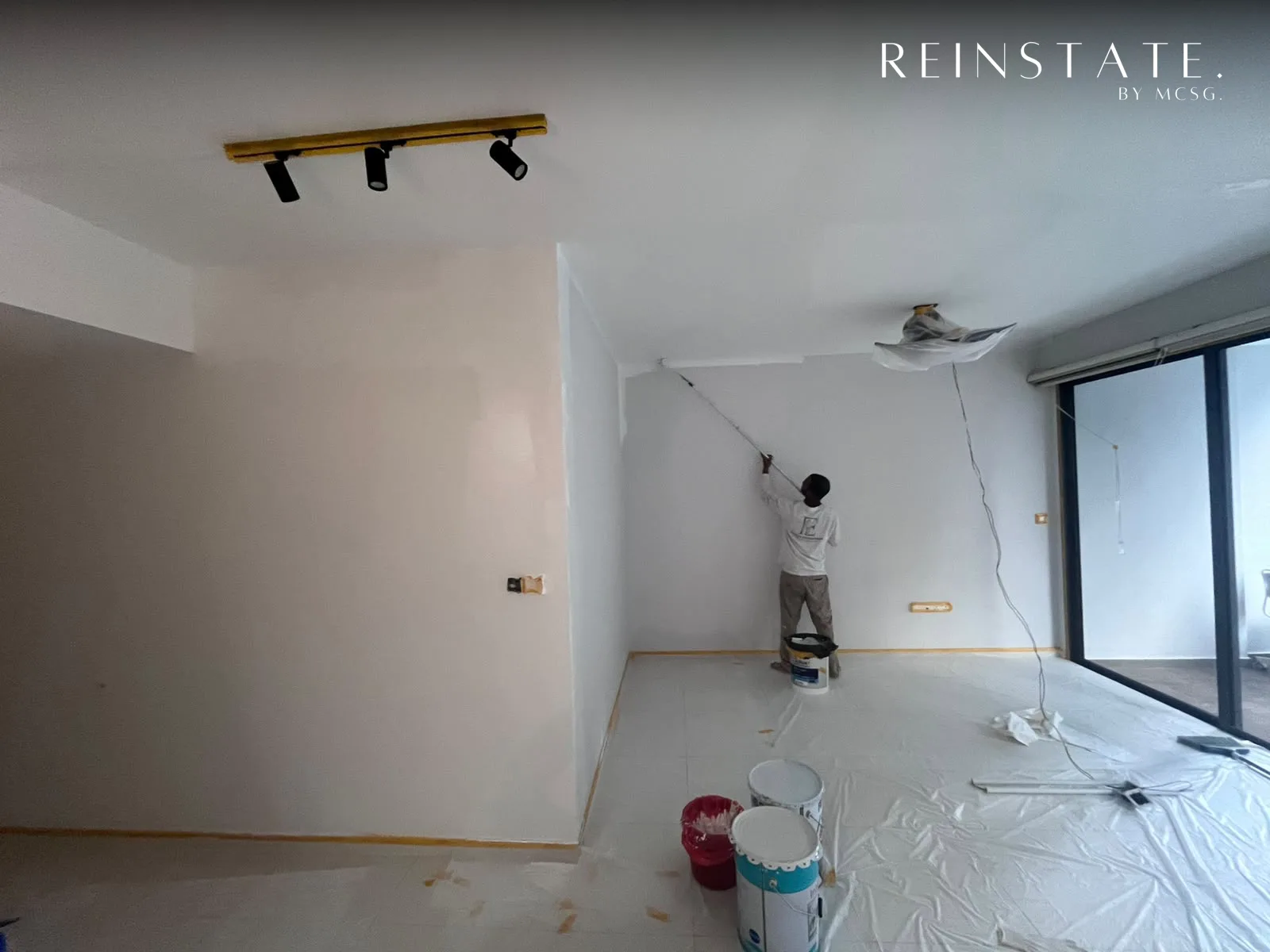
Living room with white plastic sheeting over the floor, masking tape along the wall base, open paint tins and a painter rolling paint near the ceiling edge under track lights
Floor sheeting and masking tape protecting the room while painting is under way.

2. Repair before you paint. Marks that are only painted over show through. Fill them, sand them smooth and ask whether a sealer or primer is included, because patches take paint differently from the wall around them.
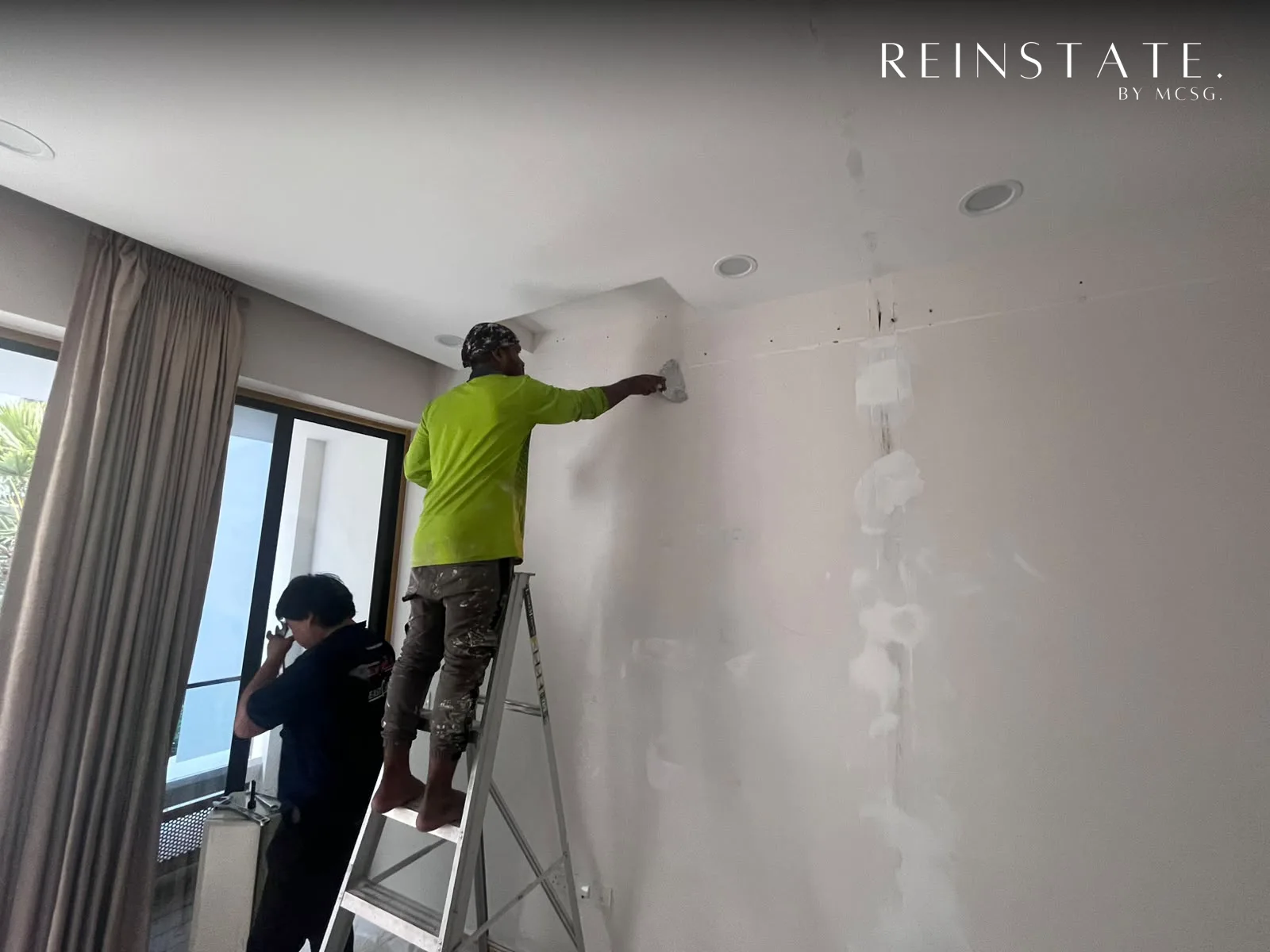
Painter on a stepladder working on a wall that shows filled and patched repair marks beside a window, with a second worker next to the ladder
Patched wall marks before the coats go on.

3. Paint in a sensible order. Ceiling edges and upper walls first, then the lower wall, with tape lines kept straight.
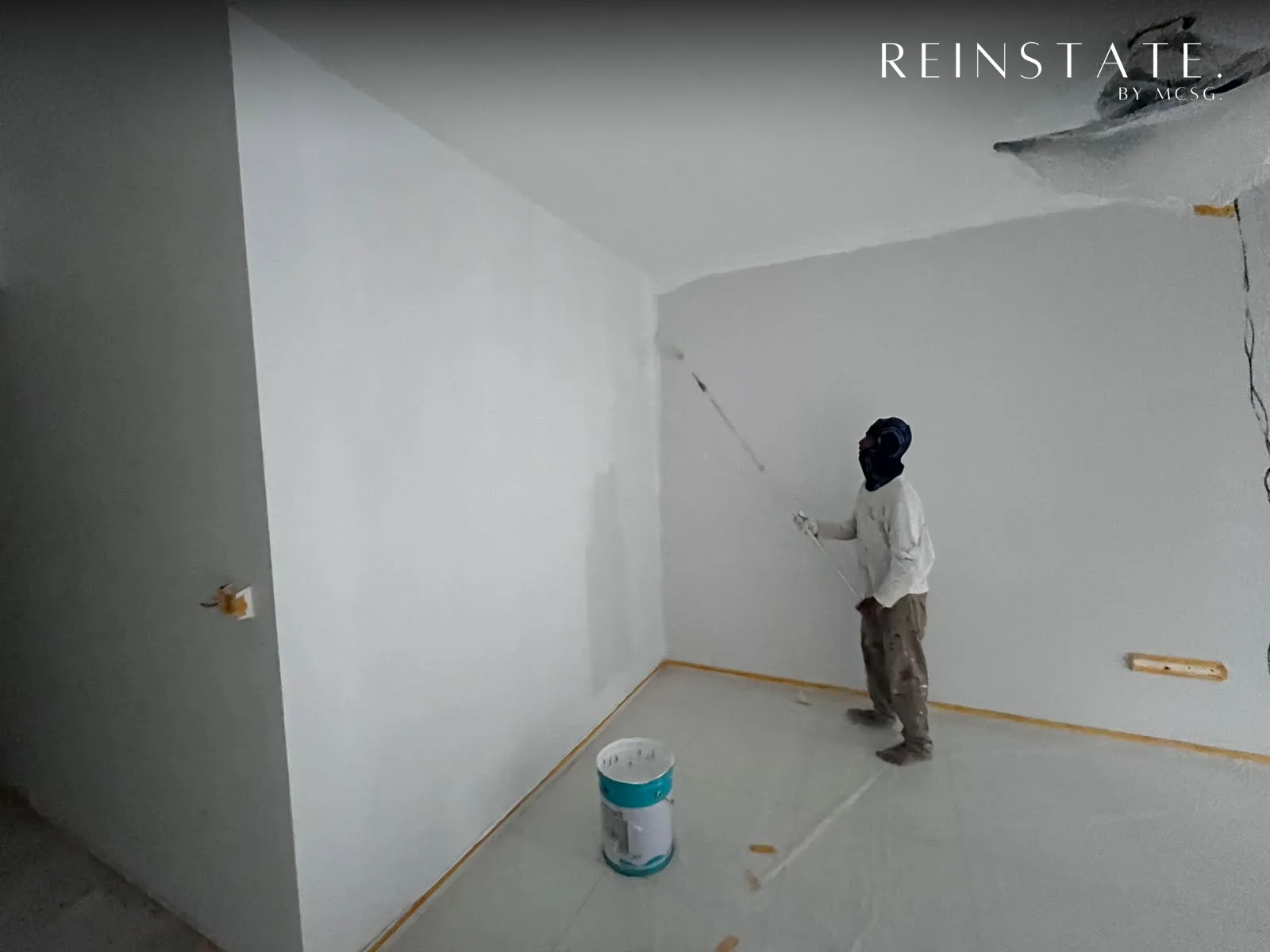
Painter rolling white paint onto a wall in an empty room, with masking tape along the skirting and a paint tin on the floor
Rolling a wall with the skirting taped off.

4. Check it in daylight. Look along each wall from a low angle with the lights off and then on. Patches, roller marks and missed corners show up this way.

What should a painting quote say?

A good quote names the areas, the repairs, the paint and the coats, so you can compare it with another one line by line.
  • Which rooms, walls and ceilings are included, and which are not.
  • Which repairs come first, such as filling, sanding and crack repair.
  • Sealer or primer: included or extra.
  • Number of coats, paint brand and colour code.
  • Floor and fitting protection, and who clears away the waste.
  • What happens if the landlord asks for a touch-up after inspection.

For what these jobs cost, see our condo repainting cost guide. We do not quote a price before we see the walls.

Where does painting fit in the handover order?

Paint after the messy trades and before the final clean. Hacking, carpentry removal and electrical changes come first. If paint goes on early, those trades will mark it and you pay twice.

Check hacking and noise rules before noisy work, and read our electrical checks before handover so fittings are sorted before the walls are closed up.
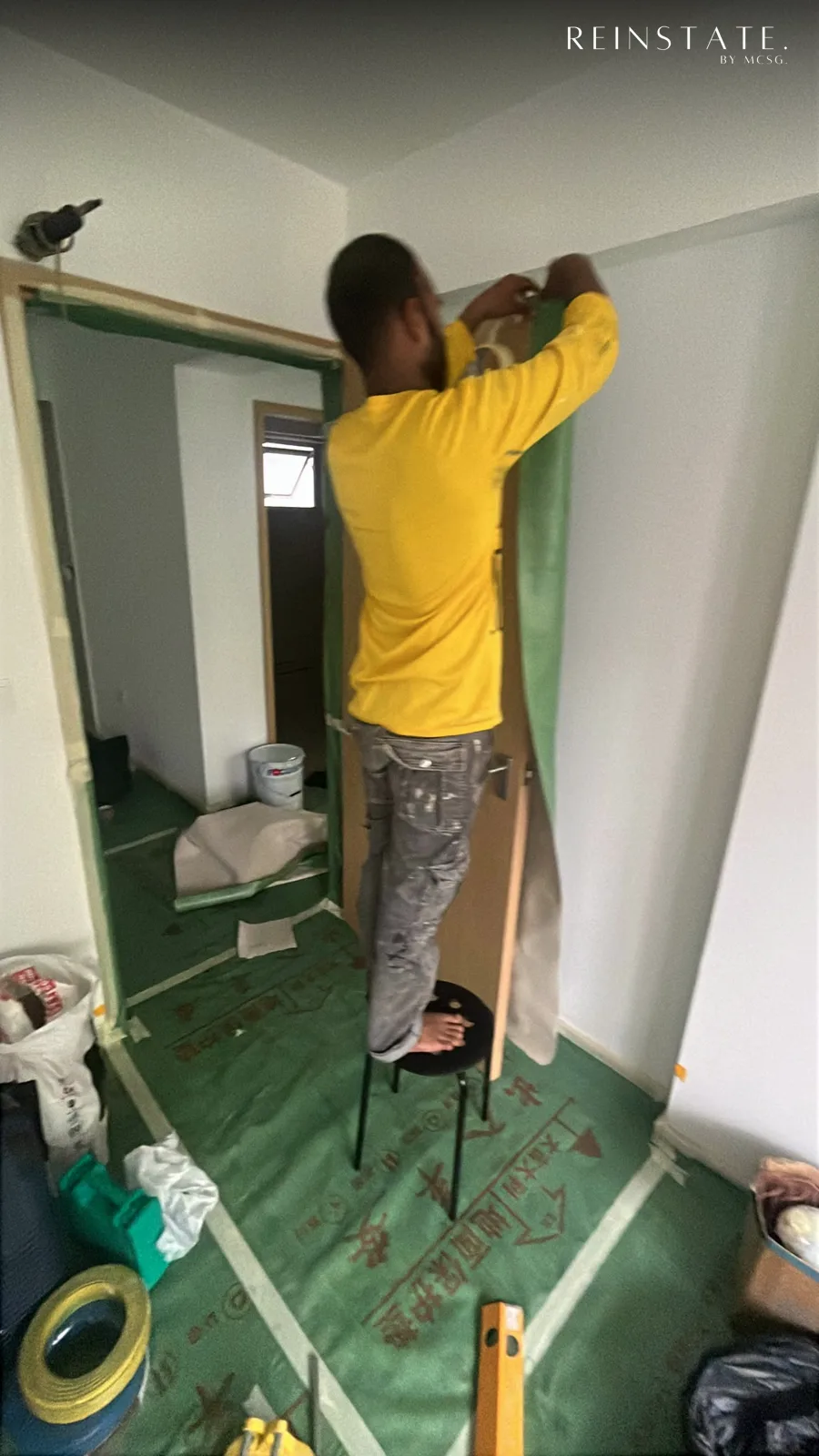
Worker in a yellow shirt at a doorway in a vacated unit, with green protective film and tape covering the floor
Green protective film on the floor of a vacated unit during works.

How long does repainting take?

It depends on the unit, the repairs needed and how long each coat needs to dry, so we do not promise a number before seeing the walls. Build in a buffer between the last trade and the landlord's inspection.

Frequently asked questions

Who pays for repainting at the end of a tenancy in Singapore?

It depends on your tenancy agreement. Many agreements return the unit as at the start of the tenancy, apart from fair wear and tear, so ordinary ageing is usually treated differently from damage or an unapproved colour change. Ask the landlord for any deduction in writing, item by item. If you cannot agree, the Judiciary lists “a tenancy agreement for residential premises not exceeding 2 years” among the claims the Small Claims Tribunals can hear, so check its eligibility rules before you file.

Can I repaint a rental in a different colour?

Only if your agreement allows it. Many agreements ask for the original colour at handover, so ask in writing before you paint and keep the reply.

Will new paint hide a damp stain or a leak mark?

No. A stain usually comes back, or the paint bubbles, if the cause is still there. Find and fix the source first, then repair and repaint the area.

Should I repaint before or after the landlord inspects?

Finish messy trades first, then repaint, then do the final clean and book the inspection. If the landlord has already listed marks to fix, agree the painting scope against that list so you only pay for what was asked.

Not sure whether to touch up or repaint?

Send three photos: your worst wall, the ceiling, and the handover clause in your tenancy agreement. We will tell you what we would check first, before anything is quoted.

WhatsApp us the photos →
Photos are from REINSTATE.by MCSG reinstatement jobs. What you must repaint is set by your own tenancy agreement; fair wear and tear is explained in our linked guides. No price is quoted here because it depends on the walls and the scope.
Who wrote and checked this. Reviewed by Mr Kobayashi, who has over 14 years of Singapore reinstatement experience, for REINSTATE.by MCSG (Microcement Singapore Pte. Ltd., UEN 202436215M, incorporated September 2024). Checked on 10 November 2026 against the Judiciary’s eligibility page for the Small Claims Tribunals point. The photos come from our own reinstatement jobs. We left out prices and paint-brand claims because we could not verify them for your walls. See our about page for who we are.
References & further reading

Authoritative sources for further reading. This guide is general information, not legal advice. Your tenancy agreement decides what applies to your unit.